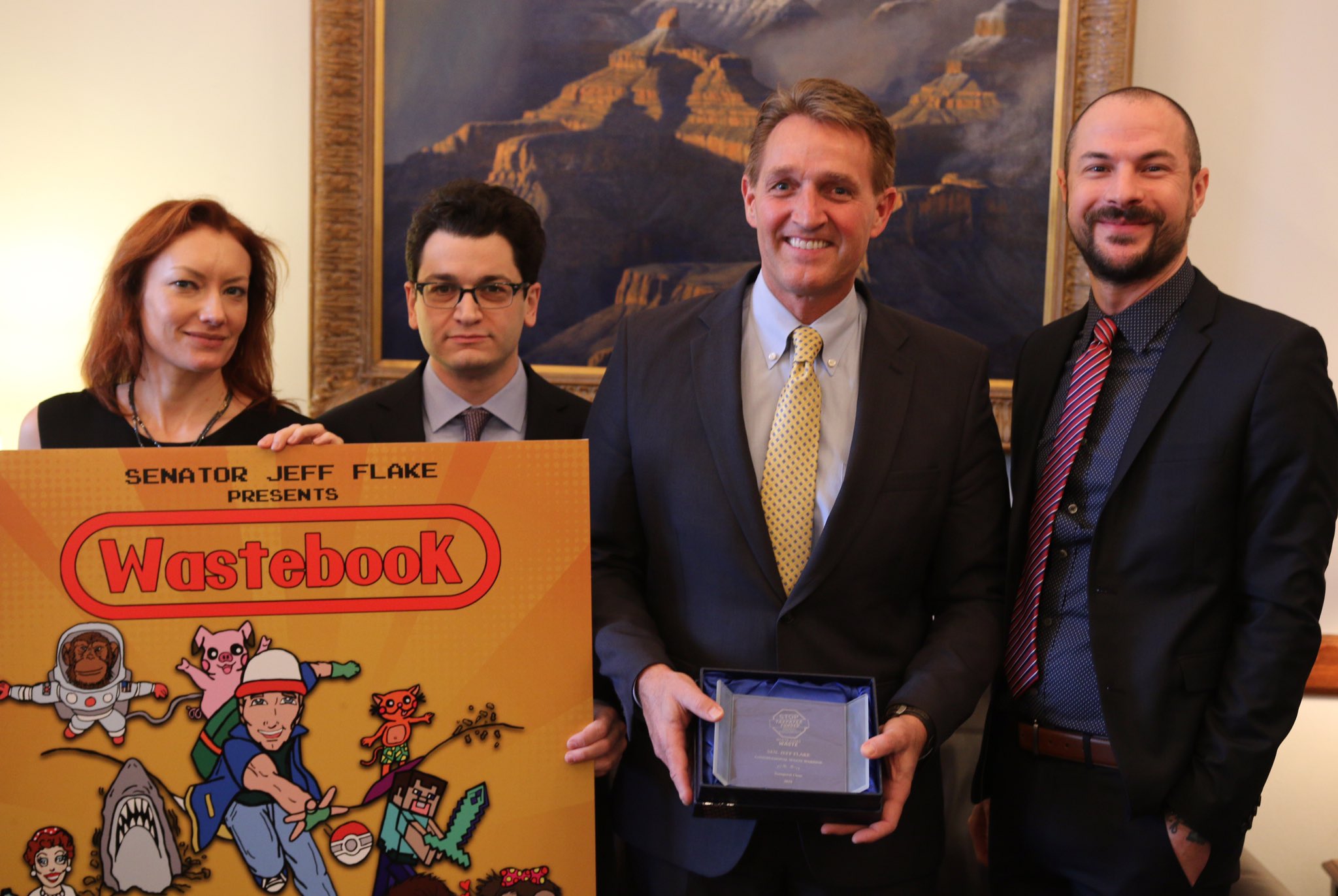
This morning, Senator Jeff Flake (R-AZ) released the 2017 edition of his renowned Wastebook, an annual report highlighting 50 of the most egregious examples of wasteful government spending.
In a media statement, White Coat Waste Project Scientific and Medical Adviser Dr. Stephen Kaufman–a board-certified physician and clinical Assistant Professor at Case Western School of Medicine–remarked:
The Wastebook provides a crucial roadmap for identifying reckless federal research programs in dire need of spending cuts. The bizarre, cruel and needless animal experiments Senator Flake highlighted are prime examples of the $15 billion-plus in wasteful government spending on unnecessary animal experimentation that the White Coat Waste Project is combatting and that a majority of Americans want removed from taxpayers’ backs.
Below we highlight the five federal animal experimentation boondoggles from Sen. Flake’s Wastebook:
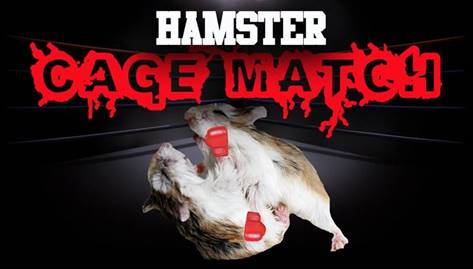
Hamster Cage Matches (Northeastern University)
Price Tag: $3.4 million from the National Institutes of Health
For more than 20 years, taxpayers have been forced to fund hamster fighting experiments at Northeastern University. In the studies, hamsters are injected with anabolic steroids and forced to fight one another in tiered tournaments. Like boxing matches, or dog fights, the violent matches were videotaped and hamsters were scored on the number of attacks they made. Sen. Flake says, “After twenty years of cage matches, it is time to get taxpayers off this hamster wheel.”
Dr. Cynthia Radnitz, a clinical psychologist and White Coat Waste Project Scientific and Medical Adviser, commented:
Government experiments that attempt to “model” human anxiety and addiction in animals can never capture the complexity of these human experiences. Consequently, I have never consulted these studies to guide my clinical work with my human patients. I have worked as a clinical psychologist for over 25 years treating anxiety and substance disorders in both private practice and at the Department of Veterans Affairs Medical Center. It continues to puzzle me why government decision-makers spend hard earned tax dollars on animal studies that are not relevant to the human patients they are designed for. For the American taxpayer to get value for their dollars, these funds should go to finance clinical studies of actual patients, in research that can yield knowledge that is directly translatable to humans and can therefore improve the treatment that they receive.
Seeing Red Makes Monkeys Randy (NYU & University of Rochester)
Price Tag: $230,000 from the National Institutes of Health
Experimenters at New York University and the University of Rochester spent nearly a quarter-million dollars of taxpayer money to study whether the color red turns monkeys on. In the experiments, monkeys were shown photos of other monkeys’ rear ends on different background colors to see which ones the monkeys stared at longer. The Wastebook rightly concludes, “Taxpayers have had enough of this monkey business which shouldn’t be provided another red cent.”

Fish On A Treadmill (University of California-San Diego)
Price Tag: $1.5 million from the National Science Foundation
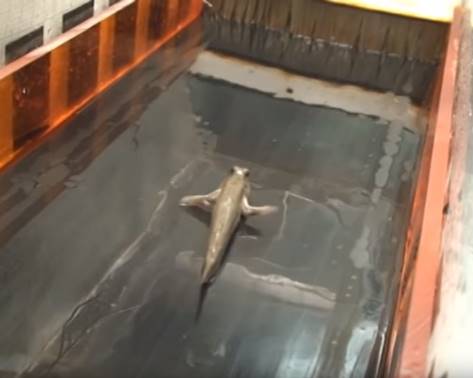
At the University of California-San Diego Scripps Institution of Oceanography, experimenters used stimulus funds to force mudskippers–a species of fish that can use their fins like legs and spend time on land–to walk on treadmills “to exhaustion” to study their oxygen use. The experimenters state that this is just the beginning of what they have planned, so Sen. Flake warns that, “since there are more fish in the sea, there will be more fish on treadmills.”
Lap Dogs (Virginia Tech)
Price Tag: $1.3 million from the National Science Foundation
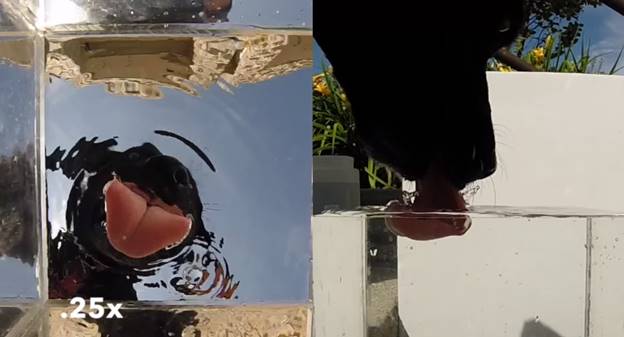
To reach the stunningly obvious conclusion that “dogs drink quite differently than cats,” experimenters at the Virginia Tech College of Engineering spent more than $1 million to videotape dogs drinking water and “measured tongue motion, recorded water volumes, and generally measured lapping in the dogs.” As Sen. Flake writes, “These types of projects are lapping up public resources that could be put to much better use.”
Angry Birds (USDA National Wildlife Research Center)
Price Tag: $118,000 from USDA
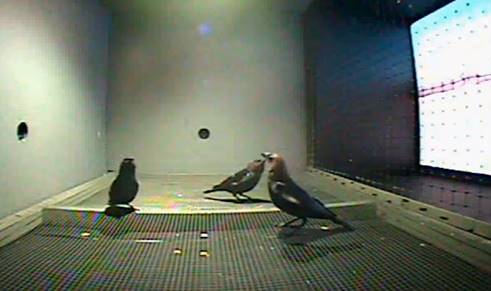
USDA wants to know how fast you need to race a Ford F250 pick-up truck at a bird in the road before they are unable to escape and become roadkill. To test their question, experimenters “drove a vehicle directly towards turkey vultures (Cathartes aura) baited to the middle of roads at typical vehicle speeds (30–90 kph) and measured their reactions.” The birds were enticed to stand in the road with a weighted-down raccoon carcass. USDA did a lab version of the study as well, where cowbirds watched videos of cars racing toward them. Thankfully, no birds were harmed in the experiments, and we agree with Sen. Flake that, “While collisions with birds and other wildlife do pose safety and conservation issues, these taxpayer-funded experiments are for the birds.”
Take a moment to contact your Members of Congress and urge them to help end wasteful experiments on dogs and other animals in government laboratories.