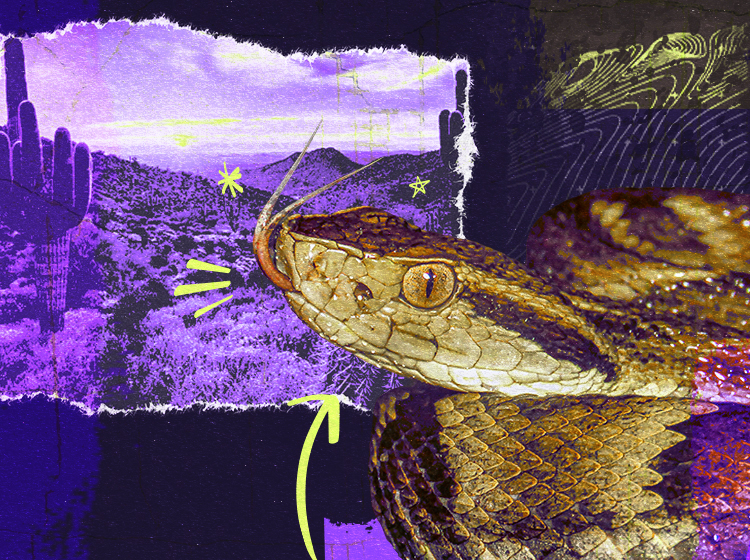
- A new White Coat Waste (WCW) investigation has traced more than $13 million in National Institutes of Health (NIH) funding to Texas A&M University–Kingsville’s Viper Resource Center — a lab that captures snakes from the wild, breeds them in captivity, and supplies venom for animal experiments.
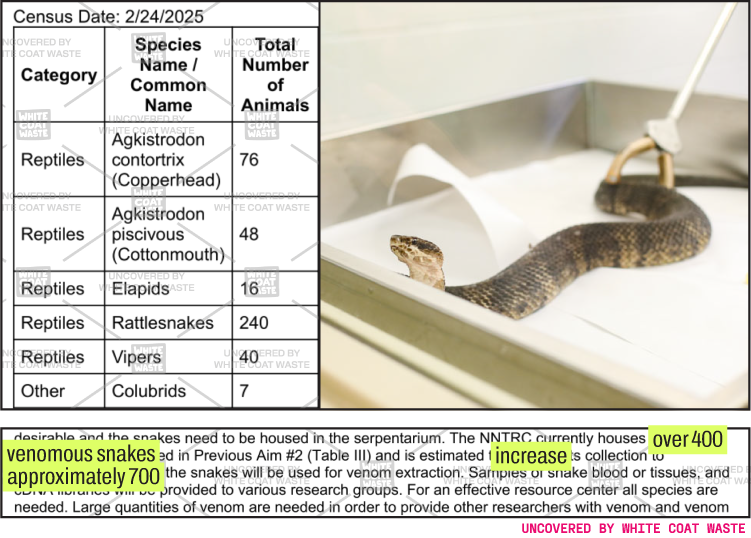
- NIH records exclusively obtained by WCW through an April 2026 Freedom of Information Act (FOIA) request show the center houses more than 400 snakes and plans to expand its “collection” to approximately 700.
- Beyond venom, the center sells snake blood, tissues, shed skins, and other biological materials, while its NIH grant calls for killing snakes annually to harvest their venom glands.
- Records uncovered by WCW link the center and its venom to experiments on opossums, rabbits, mice, wood rats, and horses involving injections, paralysis, hemorrhaging, tissue damage, lethal-dose testing, and death.
- Records uncovered by WCW link the center to taxpayer funding from the National Science Foundation (NSF) and Department of Defense (DOD).
- This investigation is part of WCW’s new Wildlife Waste campaign exposing taxpayer-funded experimentation on wild animals, including coyotes, armadillos, and more.

Timeline
When was the Viper Resource Center funded, approved, and exposed?
April 15, 2003: National Institutes of Health (NIH) awards Texas A&M University–Kingsville a grant to fund the National Natural Toxins Research Center (NNTRC), also known as the Viper Resource Center.
April 14, 2026: White Coat Waste (WCW) submits a Freedom of Information Act (FOIA) request to the NIH for records relating to the viper center.
May 14, 2026: NIH provides WCW with grant records for the viper center.
June 11, 2026: NIH awards the viper center another $550,494, bringing the grant’s total funding to $13,216,609.
WCW’s Wildlife Waste investigations are exposing taxpayer-funded experiments on wild animals across the federal government.
Now, WCW has uncovered another operation — this one involving hundreds of venomous snakes at Texas A&M University-Kingsville.
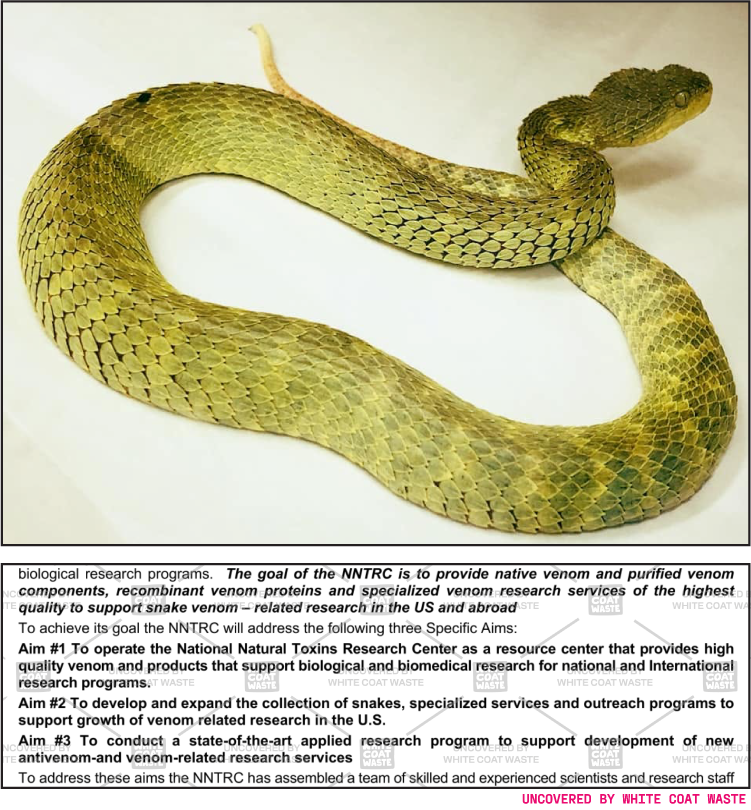
There, the National Natural Toxins Research Center (NNTRC), also known as the Viper Resource Center, receives NIH funding to maintain its snake colony and supply venom and other snake materials to laboratories in the United States and abroad.
Inside NIH’s Viper Lab
Where do the snakes come from, and what happens to them in the viper center?
NIH grant documents obtained by WCW through a FOIA request describe a colony of more than 400 snakes, with plans to expand the “collection” to as many as 700.
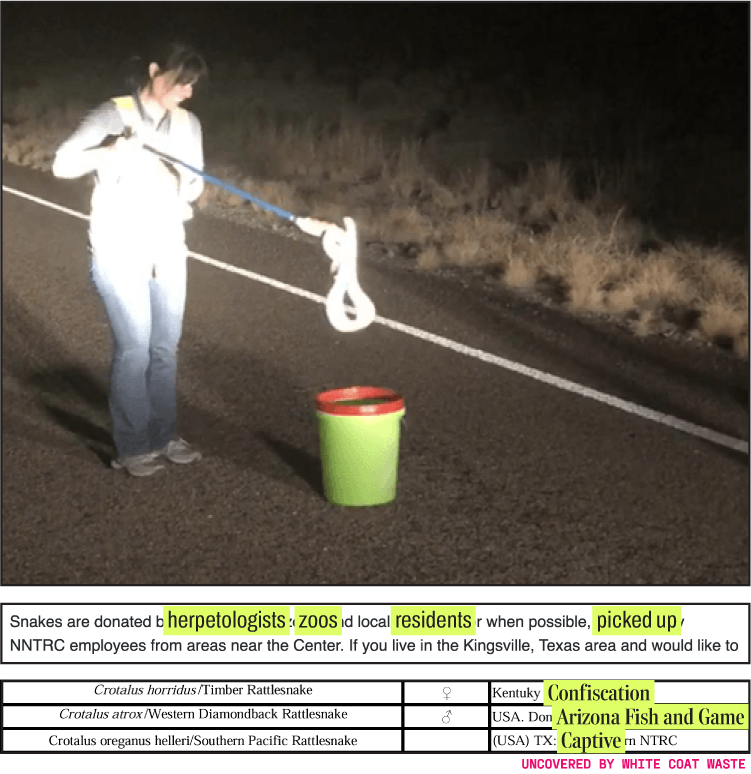
The NNTRC breeds snakes on-site while also adding to its colony through wild captures, government wildlife agency confiscations, and donations from zoos, herpetologists, and residents.
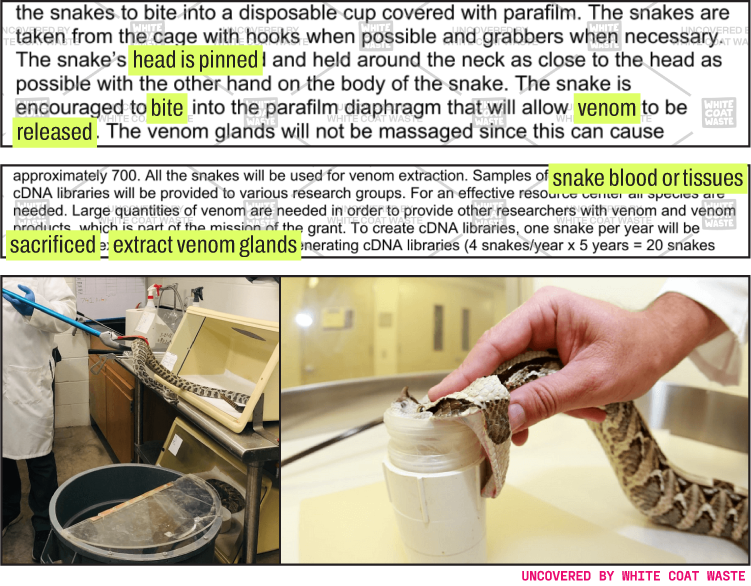
Once inside, snakes are housed in what records call “clear plastic cages” and become a source of biological material for laboratories. Photographs from within the lab show snakes coiled inside small stacked enclosures, while a recent scientific review concludes that snakes need enough room to stretch out fully to support their well-being. Unlike dogs, cats, and monkeys, snakes are excluded from the Animal Welfare Act, leaving their housing and treatment outside the law’s animal care standards and USDA inspection requirements.

Venom, Blood, and Body Parts
How are snakes used to supply materials for animal experiments?
The center regularly extracts venom from its snakes — anywhere from about once a week to once a month — and sells the venom, glands, blood, tissues, shed skins, and other materials to experimenters. Snakes are also killed each year to remove their venom glands.
Taxpayer Funding for the Viper Lab
How much taxpayer money has supported the Viper Resource Center?
Taxpayers have been footing the bill for this operation for decades.
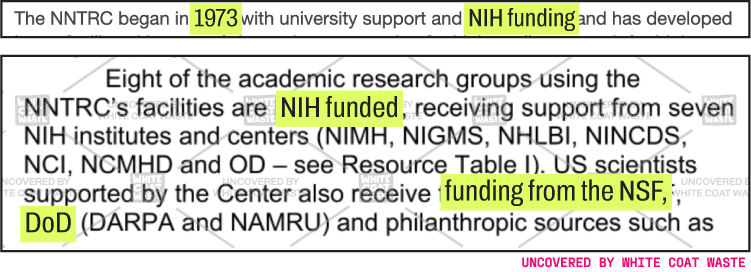
The center has received over $13.2 million of taxpayer-funding since 2003 through its primary NIH grant, which is currently scheduled to continue through April 2029.

NIH has supported the viper center dating back to the 1970s, and grant records reveal additional funding from the NIH, NSF, and Department of Defense (DOD) for scientists supported by the center.
Lethal Venom Experiments
What taxpayer-funded experiments has the center conducted on other animals?
Maintenance of the snake colony is only one part of the taxpayer-funded animal experimentation at NNTRC.
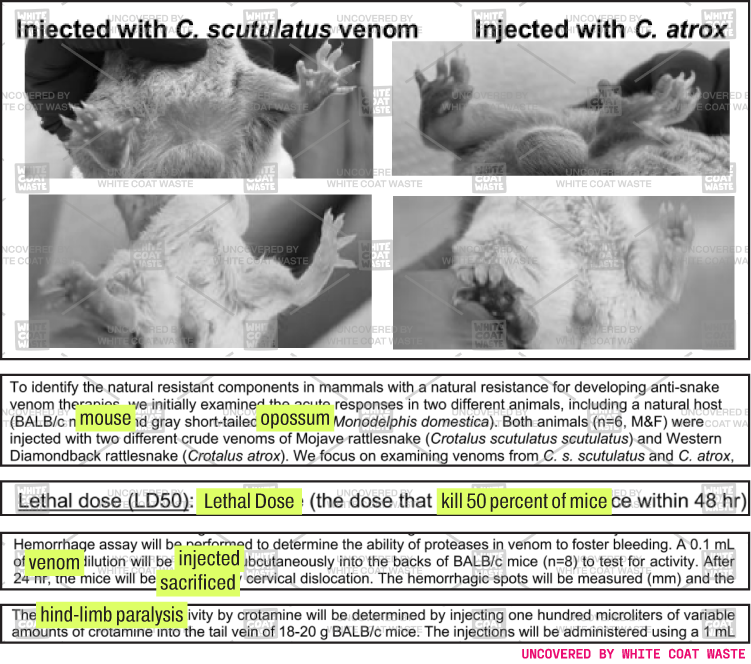
Records describe venom experiments it conducted directly on mice, opossums, and wood rats with procedures including lethal-dose tests designed to determine how much venom kills half of all injected mice, hemorrhage tests, and paralysis experiments.
Beyond the Snake Lab
How is the center’s venom used in experiments on other animals?
Venom extracted from the vipers at the NNTRC have fueled additional animal experiments both within and beyond its NIH-funded program, including tests in which mice were injected with venom and left for 24 hours before being killed and dissected to measure internal bleeding, rabbits endured repeated blood draws before venom injections and euthanasia, and horses were repeatedly injected with snake toxins and bled to produce antibodies for antivenom.

Published discussions of venom testing acknowledge just how severe these procedures can be: mice used in venom and antivenom lethality tests can experience extreme pain, distress, breathing difficulties, bleeding, organ damage, paralysis, and death, with suffering sometimes lasting 24 to 48 hours, all the while being left alongside dead cage mates.
The NIH viper investigation is part of WCW’s new Wildlife Waste campaign exposing a largely hidden corner of the industry: taxpayer-funded experimentation on wild animals, including coyotes and armadillos.
Whether animals are bred in captivity or taken from the wild, taxpayers shouldn’t be forced to bankroll their capture, confinement, experimentation, and killing.
The solution is simple: