- A new White Coat Waste (WCW) investigation exposes National Institutes of Health (NIH)-funded experiments at the University of Pittsburgh (Pitt) that cut cats’ nerves and spinal cords, pump irritating acid into their bladders, and wire them for electrical stimulation before killing them.
- Three NIH grants involve eight cats slated for spinal cord severing, including four stimulated 23 hours a day for up to four weeks, 90 Marshall BioResources cats for invasive bladder tests, and 15 cats for lethal spinal cord and nerve experiments.
- Pitt’s federal reports also document cat experiments in Category E — the USDA’s highest pain and distress reporting category — involving cats given spinal cord injuries and stimulator implants.
- NIH awarded these three Pitt projects $1,767,348 in new funding under Secretary Robert F. Kennedy, Jr., adding to the rhetoric-versus-receipts scandal exposed in WCW’s MAHA Betrayed investigation.
- Following WCW’s campaign, the Pentagon cut its Pitt cat-testing contract in May 2025, yet NIH continues funding related cat experiments, including a project involving researchers from the canceled DOD work.
The Pentagon cut the cash. Why is the National Institutes of Health (NIH) still bankrolling Pitt’s cat abuse?
Records obtained through White Coat Waste’s (WCW) Freedom of Information Act (FOIA) investigations reveal how NIH-funded white coats at the University of Pittsburgh (Pitt) plan to cripple cats, damage their nerves, irritate their bladders with acid, and subject them to electrical stimulation. The records detail three grants involving lethal cat experiments — and NIH has kept the taxpayer dollars flowing under Secretary Kennedy.
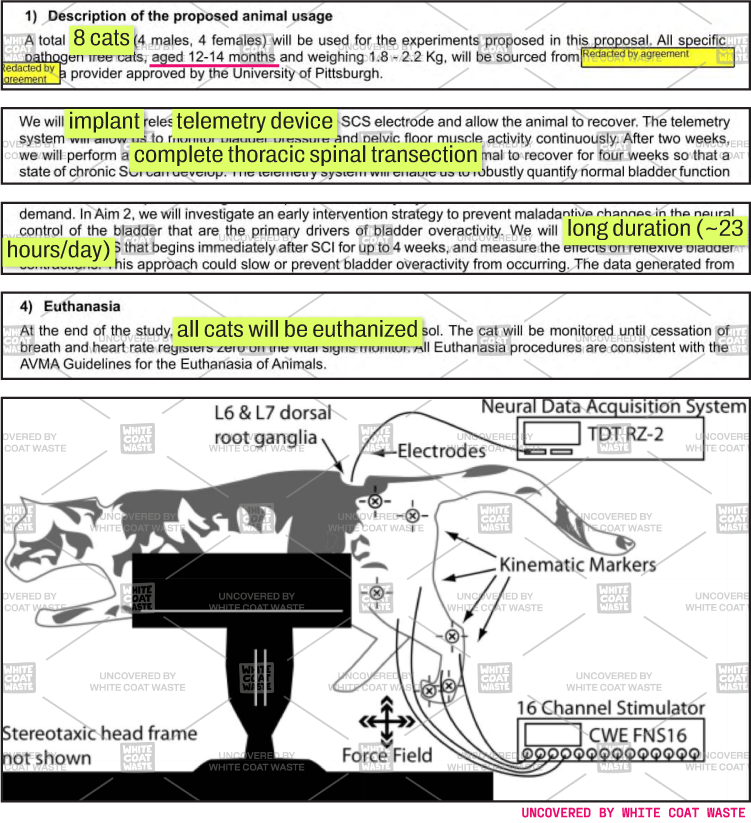
One project plans to use eight cats just 12–14 months old in experiments where researchers surgically implant electrodes, bladder catheters, and monitoring devices, then completely sever the cats’ spinal cords. Four cats undergo stimulation weeks after their spinal cords are severed; the other four begin immediately, approximately 23 hours a day for up to four weeks.
All eight cats are slated to be killed at the end of the experiments.
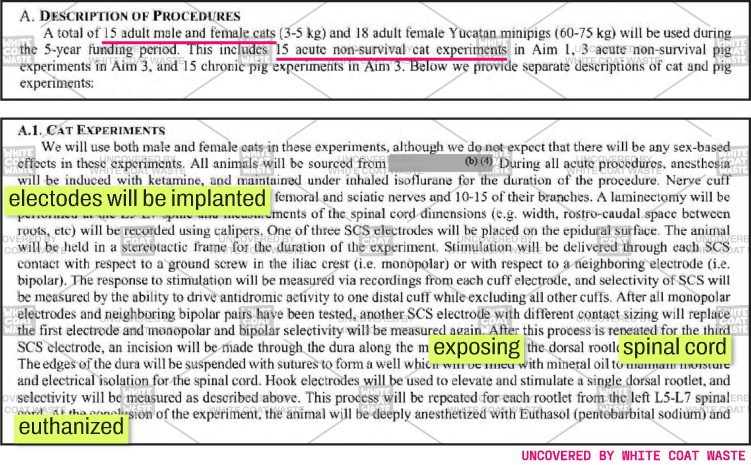
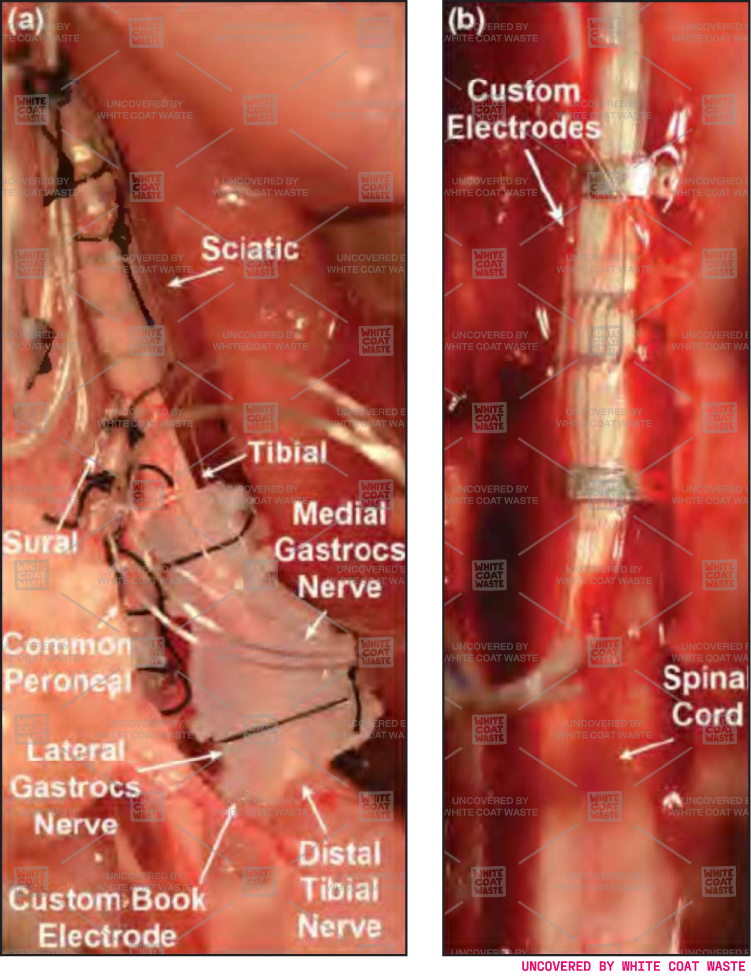
Another NIH grant planned terminal experiments on 15 cats to test spinal stimulation electrodes. Experimenters expose the cats’ spinal cords, attach electrodes to nerves, and remove the spinal cord’s protective covering to stimulate individual nerve roots.
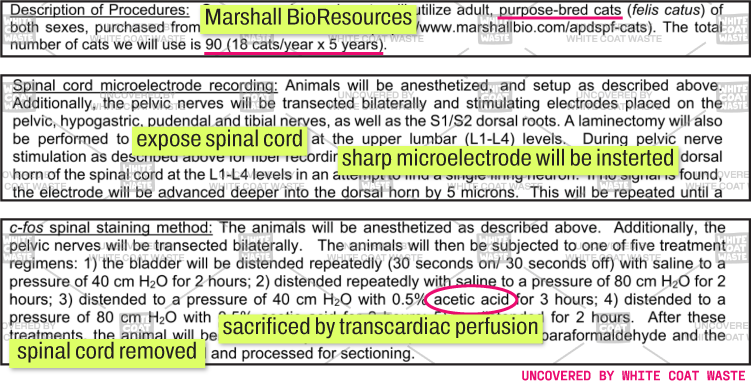
A third NIH grant budgets for 90 cats purchased from Marshall BioResources at $851 each for invasive bladder experiments. Researchers plan to cut the cats’ nerves, infuse irritating acetic acid into their bladders, and electrically stimulate nerves and bladder tissue. Some cats are also slated to have their spinal cords severed. Terminal experiments end with cats killed and their spinal cords collected.
Pitt’s own reporting adds another disturbing receipt. In fiscal years 2024 and 2025, the university reported cats in USDA Column E, the USDA’s highest pain and distress reporting category, related to surgically induced spinal cord injuries with stimulator implants — a combination matching the procedures described in Pitt’s NIH-funded experiments.

WCW has already proven this spending can be stopped.
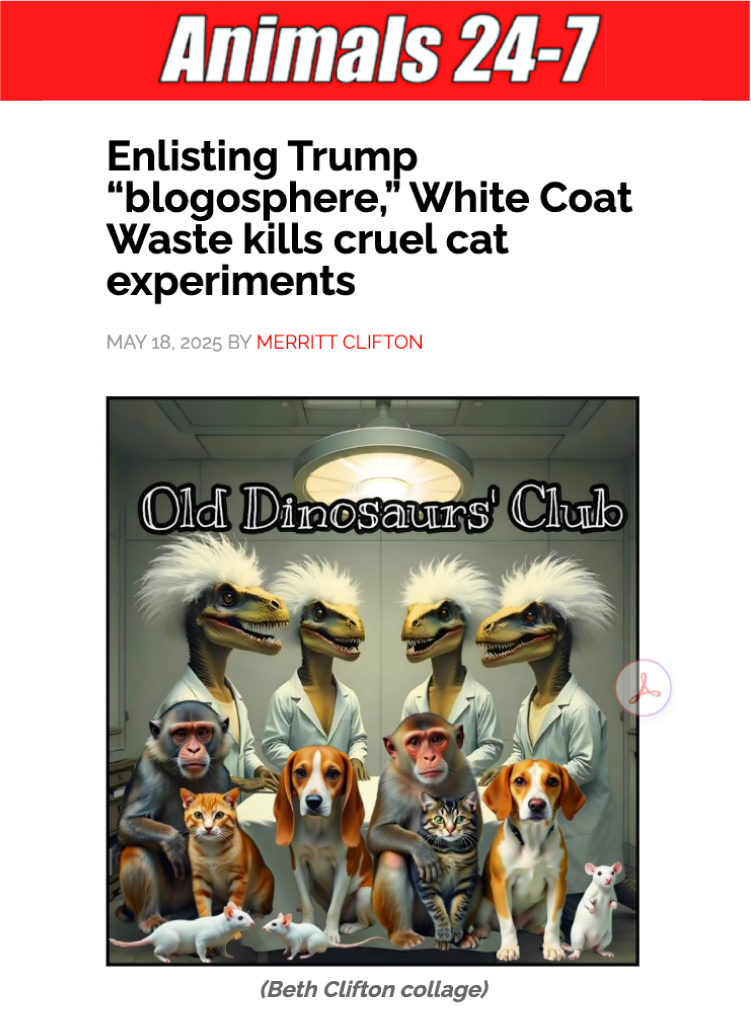
Enlisting Trump ‘blogosphere,’ White Coat Waste kills cruel cat experiments.
—Animals 24-7, May 18, 2025
In May 2025, following our investigation and campaign, the Department of Defense canceled its Pitt contract for experiments that severed cats’ spinal cords, shoved marbles and balloons into their rectums, and electroshocked them in constipation and sexual-function tests.
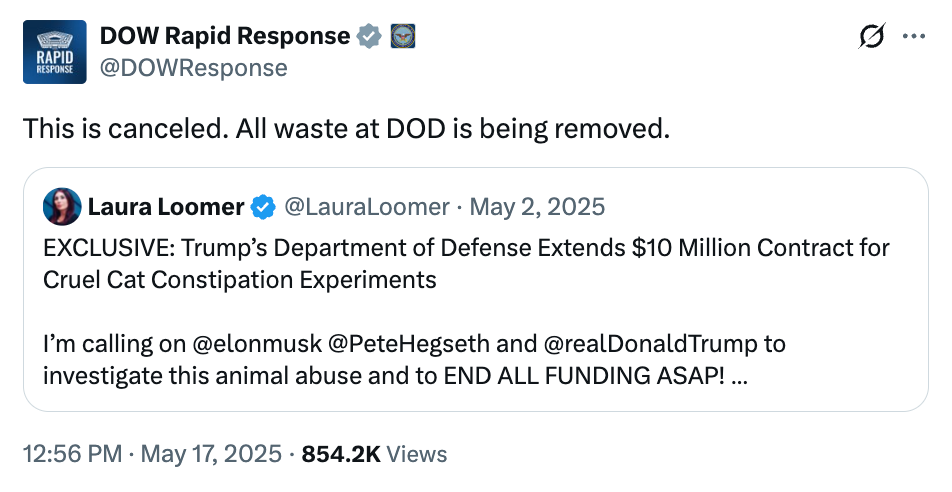
Yet NIH continues funding related work. The NIH grant funding bladder experiments on cats involves a co-investigator on the canceled Pentagon project, and collaboration with that project’s lead researcher.
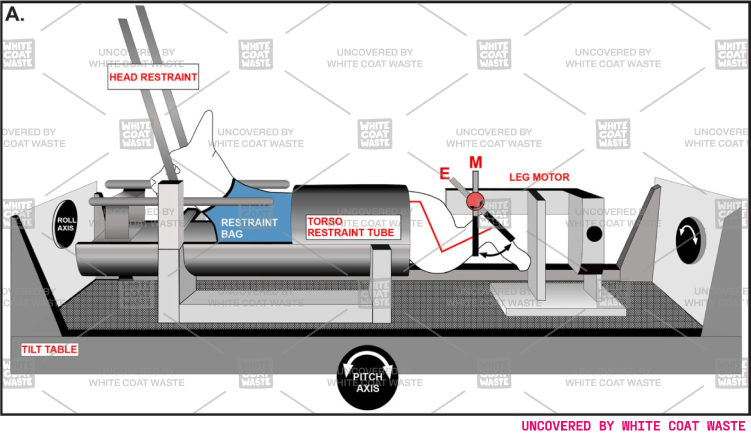
And Pitt’s taxpayer-funded cat cruelty is nothing new. WCW previously exposed NIH-funded experiments that restrained kittens and spun them on a hydraulic table to induce motion sickness. Senator Rand Paul spotlighted both those tests and Pitt’s Pentagon-funded cat constipation experiments in his 2024 Festivus report.
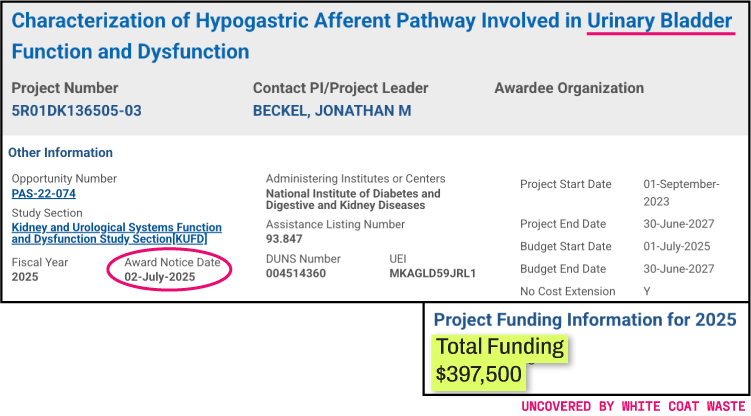
Now the funding receipts expose another MAHA betrayal: since RFK took office on February 13, 2025, NIH has awarded $1,767,348 to the three projects detailed here, bringing their combined taxpayer tab to $4,588,469.


These awards fit the pattern exposed in WCW’s MAHA Betrayed investigation: more than $225 million in new NIH spending supporting dog and cat experiments under RFK, despite promises to reduce animal testing.
WCW is leading the charge in Congress, securing language cutting dog and cat lab funding in spending bills and defunding maximum pain experiments on dogs and cats in the Farm Bill. We also backed the new PUPPS and COMPACT Acts, which would ban breeding dogs for experiments, cut NIH and other HHS funding for dog and cat testing, and promote retirement.
The Pentagon acted. NIH must follow through, cut the funding, and end this taxpayer-funded cat cruelty.