- An exclusive new White Coat Waste (WCW) investigation has uncovered more than five decades of taxpayer-funded armadillo experiments at the federal National Hansen’s Disease Program (NHDP), which uses captive-bred and wild-caught animals.
- Published experiments describe armadillos deliberately infected with leprosy and subjected to electrical nerve stimulation, nerve-severing, drug testing, biopsies, and dissections.
- NHDP receives approximately $13.7 million annually, a portion supporting armadillo experiments, while federal contracts totaling more than $300,000 have been awarded to the University of the Ozarks to capture and rear armadillos for the federal lab.
- The National Institutes of Health’s (NIH) National Institute of Allergy and Infectious Diseases (NIAID) also supports armadillo experiments through interagency agreements with NHDP.
- WCW has filed Freedom of Information Act (FOIA) requests seeking experiment protocols, veterinary records, photos, videos, contracts, and other documents about the taxpayer-funded lab.
- This investigation is part of WCW’s new Wildlife Waste campaign exposing taxpayer-funded experimentation on wild animals, including vipers, coyotes, and more.

Timeline
When was the armadillo rearing contract funded and when did WCW investigate?
December 4, 2025: White Coat Waste (WCW) submits a Freedom of Information Act (FOIA) request to the Health Resources and Services Administration (HRSA) probing its NHDP armadillo lab.
February 1, 2026: HRSA awards the University of the Ozarks a new contract worth up to $183,000 to rear armadillos for the NHDP lab.
March 11, 2026: HRSA commits $35,600 under the armadillo-rearing contract.
March 26, 2026: WCW submits another FOIA request to HRSA seeking records about the newly awarded February 2026 armadillo-rearing contract.
September 17, 2026: HRSA commits another $35,600 under the armadillo-rearing contract.
Following our investigations uncovering taxpayer-funded experiments on coyotes and vipers, WCW is now exposing another long-running government animal lab — this one capturing and breeding armadillos for invasive leprosy experiments that have continued for more than five decades.
Inside NHDP’s Armadillo Lab
How does NHDP capture, breed, and maintain its armadillo colony?
The NHDP, housed within the U.S. Department of Health and Human Services’ HRSA, first began using armadillos for leprosy experiments in 1971 and maintains what the program calls the “only colony of M. leprae-infected armadillos in the world.”

Records show that NHDP has used between 53 and 106 armadillos annually in recent years, and the federal program doesn’t rely solely on captive-bred animals to maintain its supply.
A federal spending database shows the NHDP has paid the University of the Ozarks to capture and rear armadillos for taxpayer-funded experiments.
One contract called for twenty-four siblings from six wild-caught pregnant females, along with the mothers themselves; separately, published experiments document offspring being shipped to NHDP at just four to five months old and free-ranging armadillos being captured by local trappers for direct transport to the federal lab.

Decades of Leprosy Experiments
What happens to armadillos used in NHDP experiments?
Once inside the laboratory, armadillos are used in invasive and deadly experiments, including high-dose leprosy infections, electrical nerve stimulation, deliberate nerve-severing, biopsies, drug testing, and invasive tissue collection and dissections.

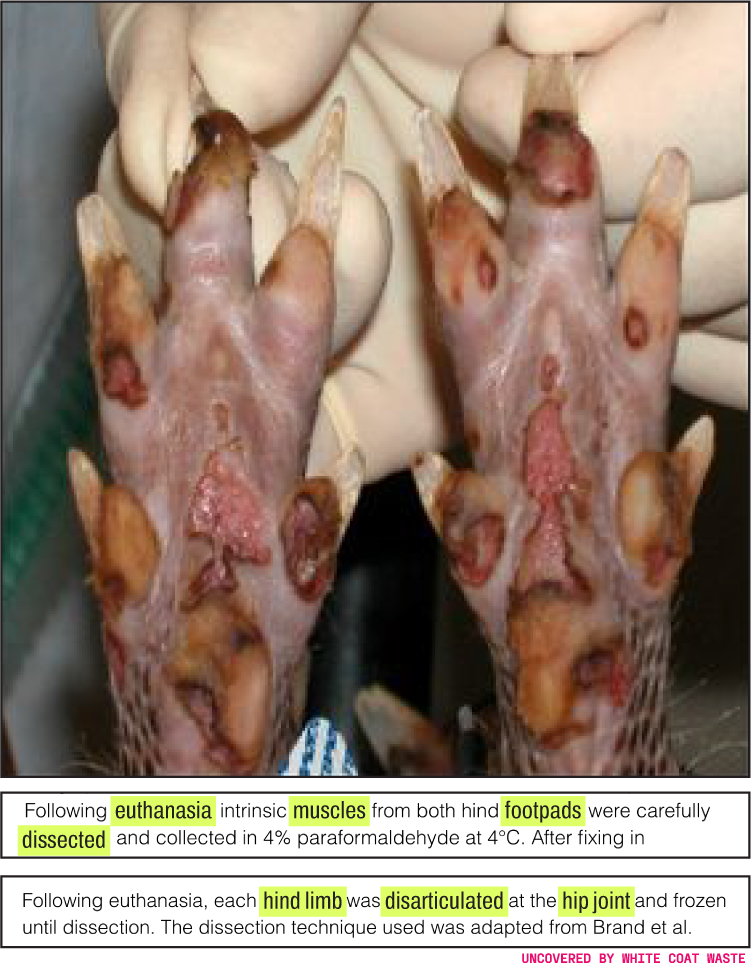 Exhibit D: Excerpts and photographs from journal articles and from NHDP’s FY27 budget justification describing experiments on armadillos conducted at NHDP.
Notably, NHDP itself acknowledges that leprosy is “not highly contagious” and that around 95 percent of people are naturally immune.

Yet, for decades, the program has deliberately infected armadillos with the disease while taxpayers foot the bill.
Taxpayer Funding for Armadillo Experiments
Which federal agencies fund armadillo capture, rearing, and experiments at NHDP?
Congress provides NHDP with approximately $13.7 million annually, a portion of which supports the armadillo experiments.

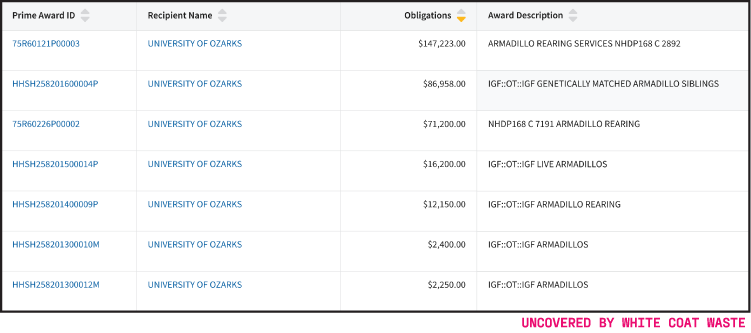
HRSA has also repeatedly paid the University of the Ozarks for armadillo capture and breeding.
In February 2026, HRSA awarded the University of the Ozarks a new armadillo-rearing contract worth up to $183,000, extending future purchases through January 2030.
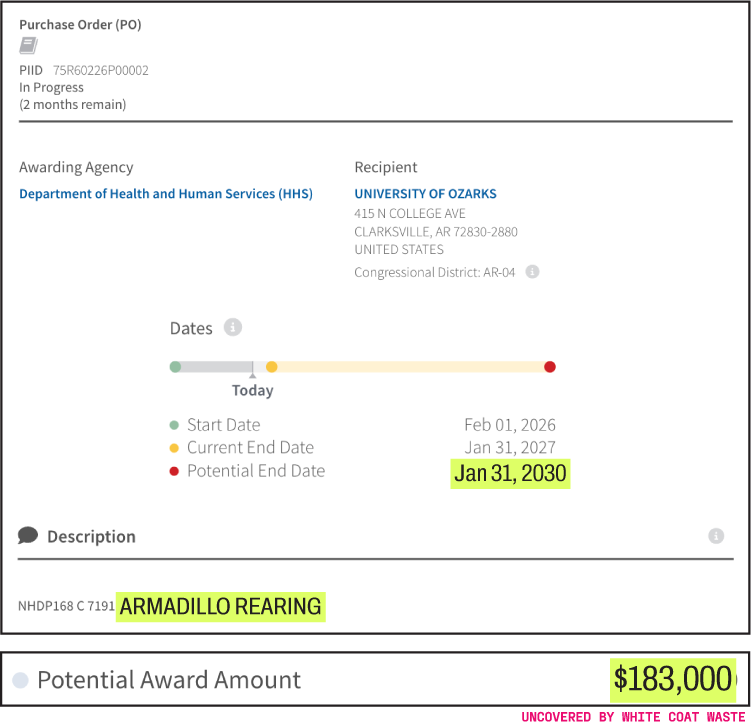
This continues a longstanding funding relationship: since 2013, HRSA has obligated more than $300,000 in contracts to the university to acquire and rear armadillos for the NHDP.
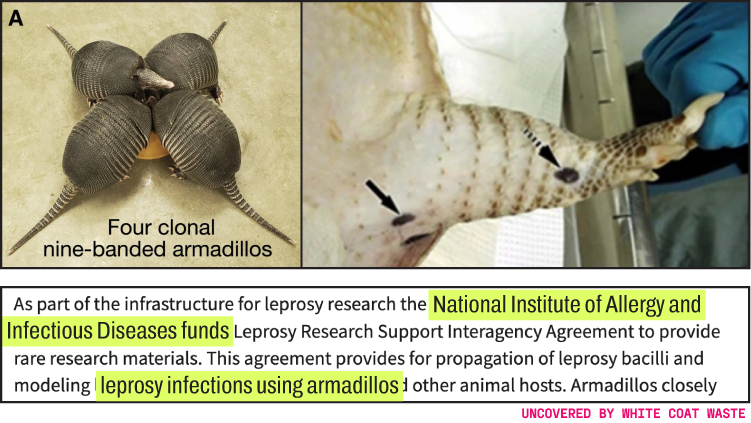
The taxpayer funding doesn’t stop with NHDP: National Institutes of Health’s (NIH) National Institute of Allergy and Infectious Diseases (NIAID) has also funded invasive armadillo experiments through interagency agreements with the program.
WCW’s Investigation Continues
What records are WCW seeking about the armadillo experiments?
To uncover more about this taxpayer-funded armadillo laboratory, WCW has filed FOIA requests, which remain pending, seeking animal protocols, veterinary records, acquisition and disposition records, photos, videos, contracts, and other documents.
This armadillo investigation joins WCW’s Wildlife Waste exposés on coyotes and vipers, revealing how federal agencies fund the capture, breeding, confinement, and experimentation of wild animals.
Taxpayers shouldn’t be forced to fund this abuse.
The solution is simple: