
- A White Coat Waste (WCW) investigation exposes a new National Institutes of Health (NIH) grant funding experiments on baby cows intentionally bred with a fatal disease at the University of Massachusetts Chan Medical School.
- The project began in August 2025 under Health and Human Services Secretary Robert F. Kennedy Jr., has received $1,266,190 so far, and is scheduled to run through May 2030 — despite his promise to dramatically reduce NIH animal testing.
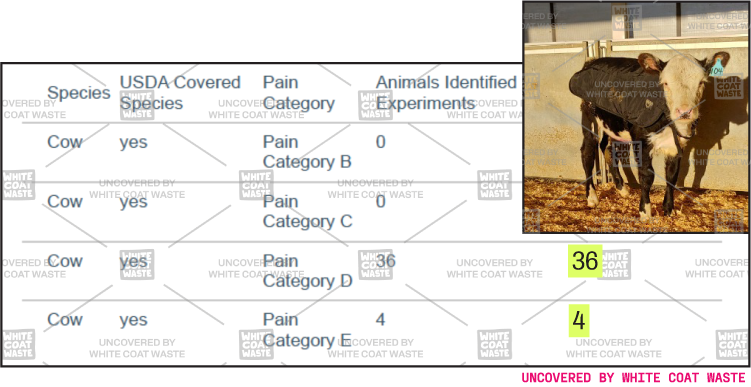
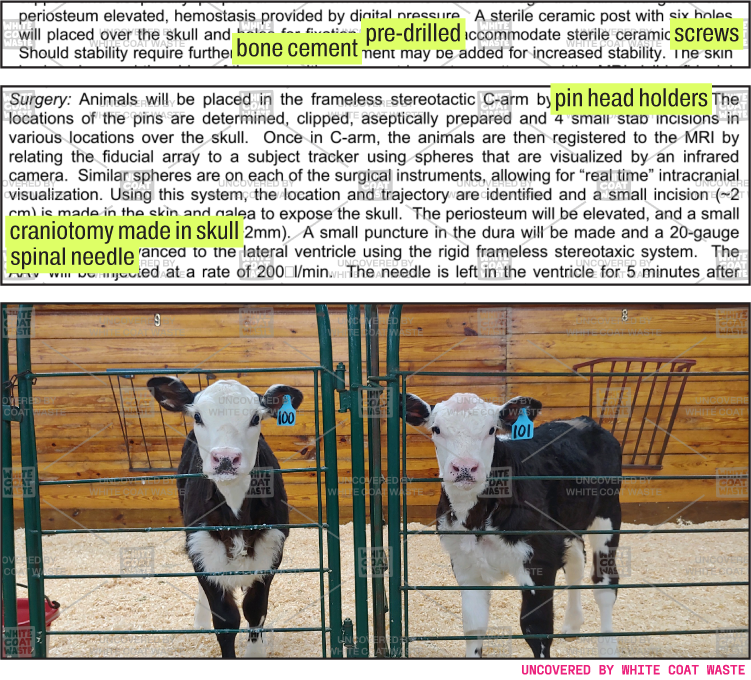
- Records obtained by WCW describe plans to use approximately 40 calves in experiments involving skull drilling, brain and spinal fluid injections, tissue biopsies, and killing animals for dissection.
- Untreated calves are assigned to the highest pain and distress category because effective treatment would interfere with documenting the severe brain disease expected to leave them unable to stand within approximately three days of birth.
- The lead experimenter also conducts taxpayer-funded experiments on sheep with fatal genetic diseases and has conducted experiments using cats from the Auburn University breeding colony previously exposed by WCW.
White Coat Waste (WCW) has been following the money behind the National Institutes of Health’s (NIH) continued funding of cruel and wasteful animal experiments under Secretary Robert F. Kennedy Jr.
Now, our latest investigation exposes a new NIH award, issued July 30, 2025, that has provided more than $1.2 million for experiments on baby cows bred to suffer from a devastating genetic disease, with plans to drill into their skulls, inject their brains, and kill them during a project running from August 2025 through May 2030.
NIH approved this project months after RFK took office and pledged to dramatically reduce animal testing.
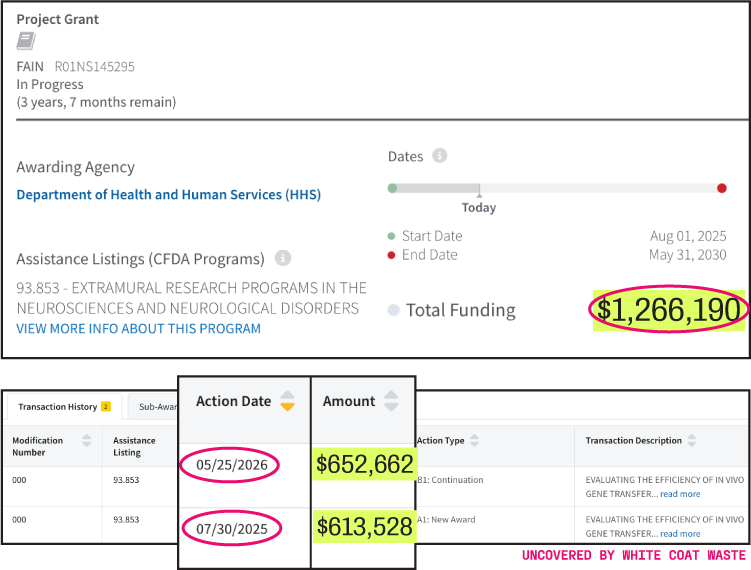
Documents obtained by WCW through the Freedom of Information Act (FOIA) and a Massachusetts public records request detail plans to use approximately 40 calves in the experiments.
The calves are bred with Maple Syrup Urine Disease, or MSUD, an inherited disorder that causes toxic substances to accumulate in the body and damage the brain. They will be obtained from a farmer who maintains cattle carrying the mutation and uses a local dairy’s cows for embryo implantation, with experiments planned at both University of Massachusetts Chan Medical School and Tufts University.
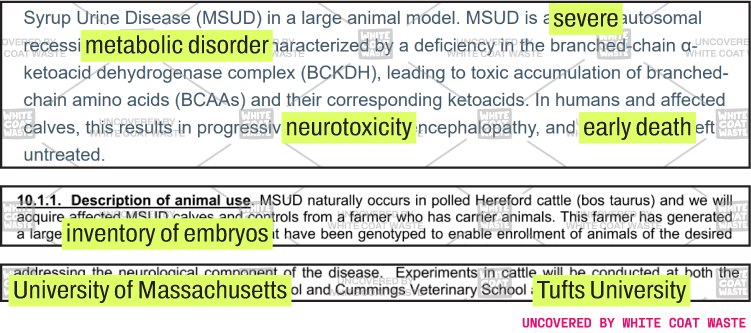
The grant application describes affected calves developing fatal brain swelling within three days of birth, with symptoms including weakness, rigid limbs, abnormal eye movements, and an inability to stand.
Untreated MSUD calves will be killed when they exhibit signs of severe brain dysfunction.


The protocol anticipates that approximately one-quarter of affected calves will be stillborn or already show neurological symptoms at birth. The remainder are expected to develop neurological disease within their first days of life.

For these animals, suffering is built into the experiment.
Untreated calves are expected to deteriorate within days of being born. The researchers assigned them to USDA Column E, the category for experiments that cause pain or distress and for which no relief is given, because treatment would interfere with documenting disease progression.

Other calves will receive experimental gene therapies through intravenous injections and injections into their brains or the fluid surrounding their brains and spinal cords.
The funding application describes drilling holes into the skull, securing a positioning post with screws and potentially cement, and advancing a needle into a fluid-filled chamber inside the brain.
Additional procedures include muscle and organ biopsies, spinal fluid collection, repeated blood draws, maze tests, brain scans, and nerve testing involving electrical stimulation.
Treated calves will be killed at three months for tissue collection, while longer experiments extend to two years in the application and up to five years in the protocol.
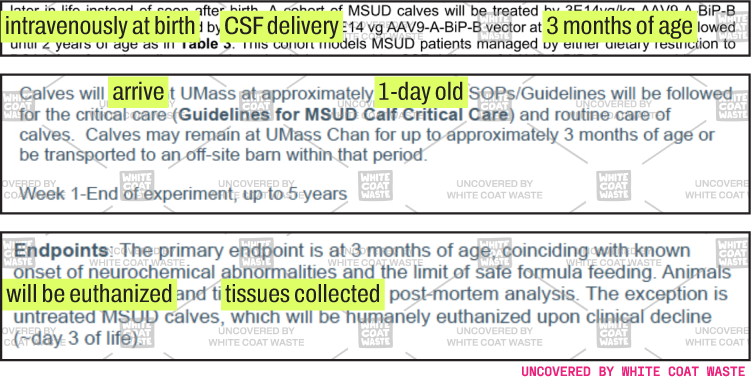
The records also list sale for slaughter through a sale barn as a possible disposition for cattle no longer needed for experiments or maintaining the herd.

One baby cow, identified only as Calf 104, offers a glimpse of that suffering. In an earlier NIH-funded gene therapy experiment cited in the funding application, experimenters isolated the newborn female in a stall immediately after birth. She soon became lethargic and less responsive, progressively lost coordination, and became unable to stand — a living animal reduced to a number as a devastating disease attacked her brain.


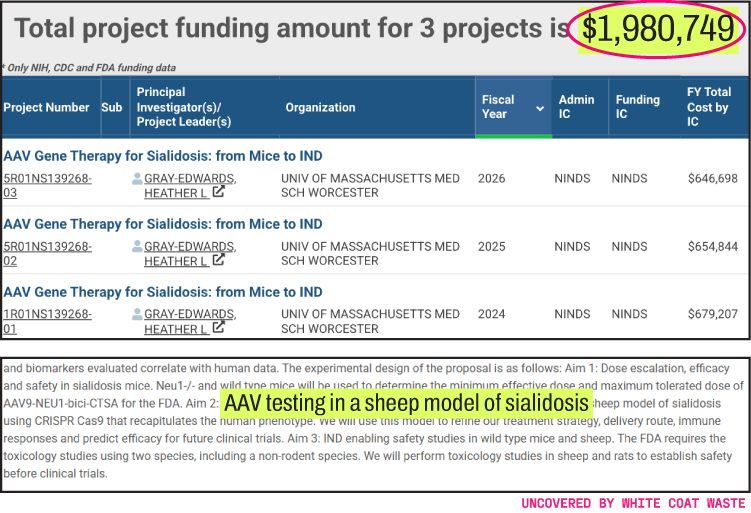
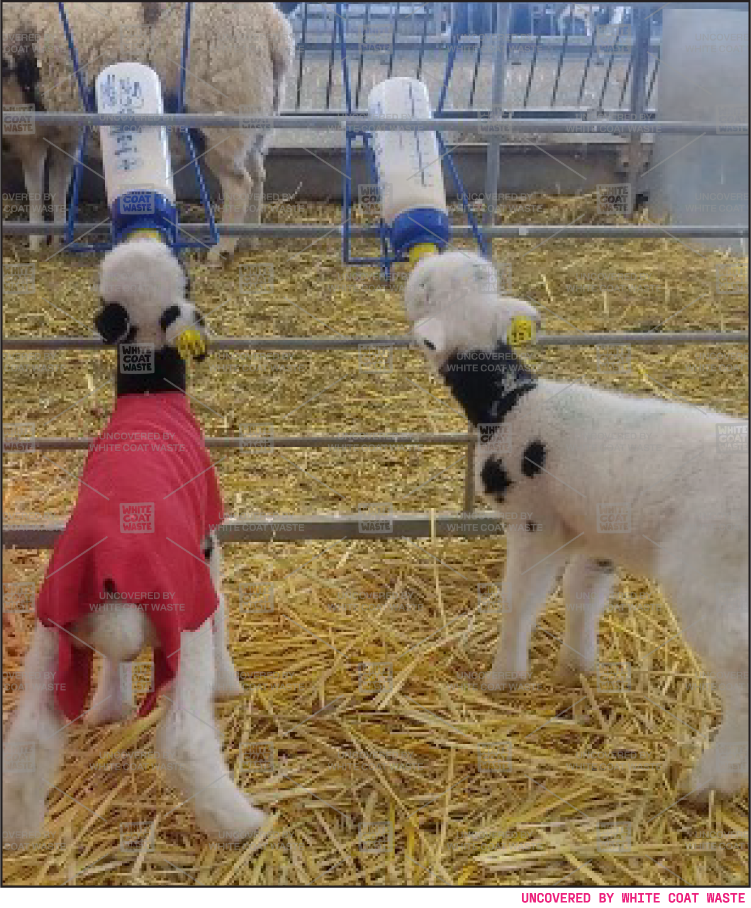
Beyond calves, the lab also conducts taxpayer-funded gene therapy experiments on sheep bred with devastating genetic disorders, including sialidosis, GM3 synthase deficiency, and Tay-Sachs disease, involving injections into the brain and long-term monitoring of neurological decline.
The lead researcher also has a currently active NIH grant totaling $1,980,749 to date for a project that includes gene therapy experiments on sheep genetically engineered to develop sialidosis. The project is slated to run through May 2029.
There is also a familiar kitten connection: the researcher previously conducted experiments at Auburn University involving genetically diseased cats from the breeding colony exposed by WCW, which produces sick kittens for invasive and deadly taxpayer-funded experiments.
This new calf grant follows the pattern WCW uncovered at Cornell’s horse laboratory: NIH approving new animal experiments under leadership that promised to cut them.

A disturbing new investigation by White Coat Waste (WCW) has uncovered what many animal advocates are calling one of the most heartbreaking examples of taxpayer-funded animal abuse yet, this time involving one of America’s most iconic and beloved animals: horses.
– World Animal Net (WAN)
Our MAHA Betrayed investigation separately documented more than $225 million in new NIH spending supporting dog and cat experiments under RFK.
Promises to reduce animal testing are meaningless if the government keeps paying for it. WCW will continue to expose these funding decisions and lead the fight to end them.