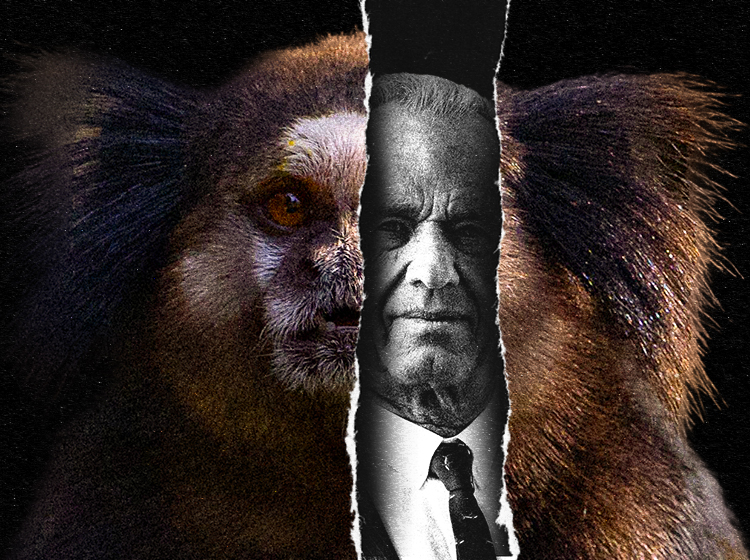
- A new White Coat Waste (WCW) investigation reveals that the National Institutes of Health (NIH) has awarded nearly $10 million to a Yale monkey lab during Secretary of Health and Human Services Robert F. Kennedy, Jr.’s tenure, despite his pledges to end primate testing.
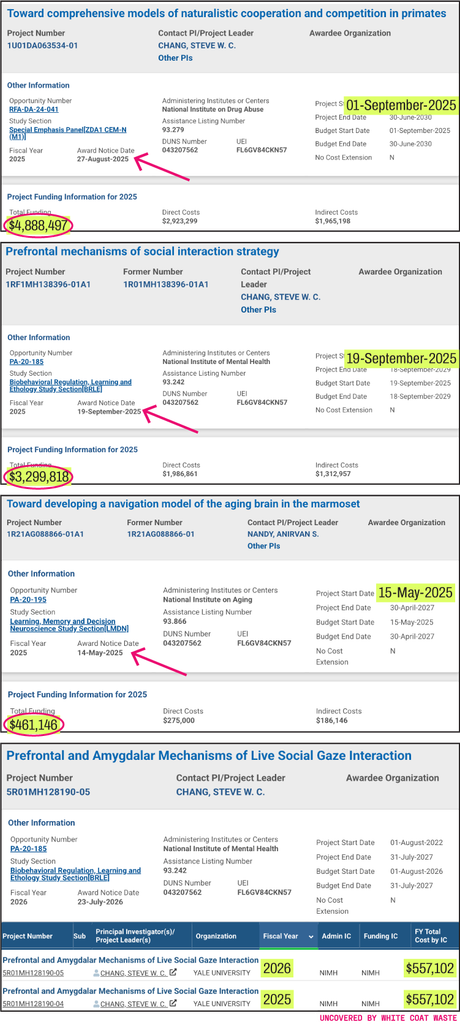
- Records obtained by WCW detail a new August 2025 $4,888,497 grant supporting experiments that restrict marmosets’ access to fluids, make them cooperate or compete for liquid rewards, and surgically implant monitoring devices under their skin.
- RFK’s NIH also awarded Yale two other new marmoset research grants in 2025: $3,299,818 for social-interaction experiments beginning in September and $461,146 for an aging-brain project beginning in May, and another $1,114,204 for a separate ongoing grant.
- WCW filed a formal complaint against Yale in July 2026, after finding that its publicity about the monkey experiments omitted funding disclosures required by federal law.
- The investigation builds on WCW’s campaign to expose RFK’s continued funding of primate experiments and hold taxpayer-funded laboratories accountable for spending transparency violations.
Secretary of Health and Human Services Robert F. Kennedy, Jr. promised to end primate testing, but new records obtained by White Coat Waste (WCW) reveal nearly $10 million in NIH funding under RFK flowing to a Yale University marmoset lab.
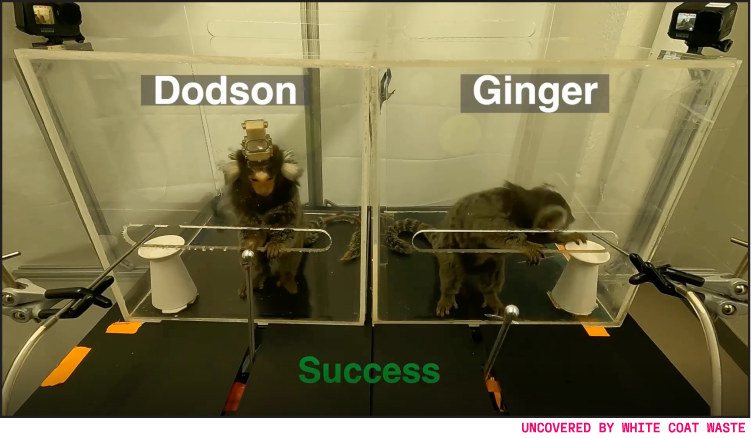
Exhibit A: Video footage from published experiments involving Yale’s marmosets.
The findings build on WCW’s January 2026 investigation exposing more than $30 million in new fiscal year 2026 funding for 40 primate projects, including over $14 million awarded after RFK’s December pledge.
WCW’s investigation tallied $9,763,665 in NIH awards under RFK for marmoset experiments connected to one Yale experimenter. That includes three newly awarded 2025 grants totaling $8,649,461 — $4,888,497 for cooperation and competition experiments, $3,299,818 for a social-interaction grant beginning in September, and $461,146 for an aging brain project beginning in May — plus another $1,114,204 for a separate ongoing grant.
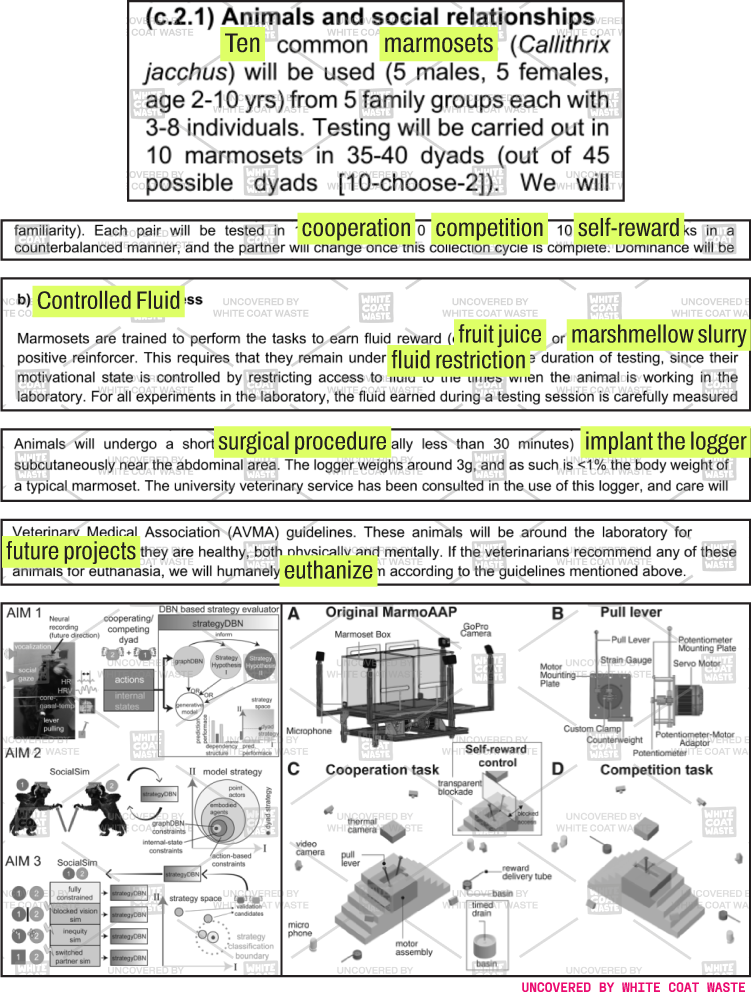
WCW obtained records related to the new $4.8 million award via a Freedom of Information Act request (FOIA). Documents describe plans to restrict 10 marmosets’ access to fluids and train them to pull levers to earn juice or diluted marshmallow rewards. Some tasks require the monkeys to coordinate their actions; others make them compete, with only the first monkey to pull a lever receiving a reward. Experimenters will also surgically implant devices beneath the animals’ skin to monitor heart rate and body temperature.
Even after this project ends, the marmosets will be kept in the lab to be subjected to more experiments.
Related taxpayer-funded experiments from the same lab went further: marmosets had titanium-and-plastic implants surgically attached to their skulls and probes inserted into their brains so experimenters could wirelessly record brain activity during tasks.
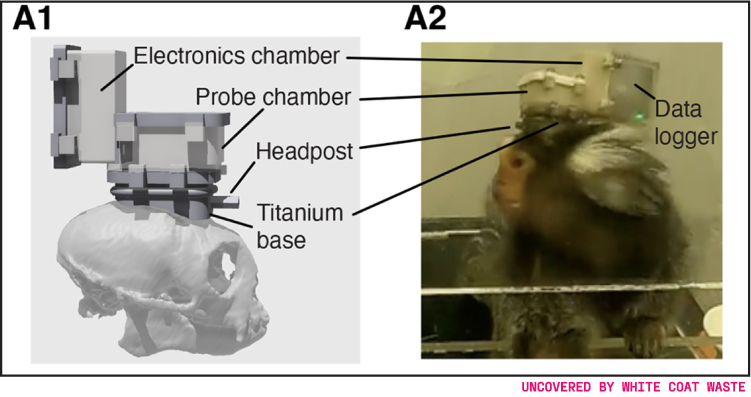
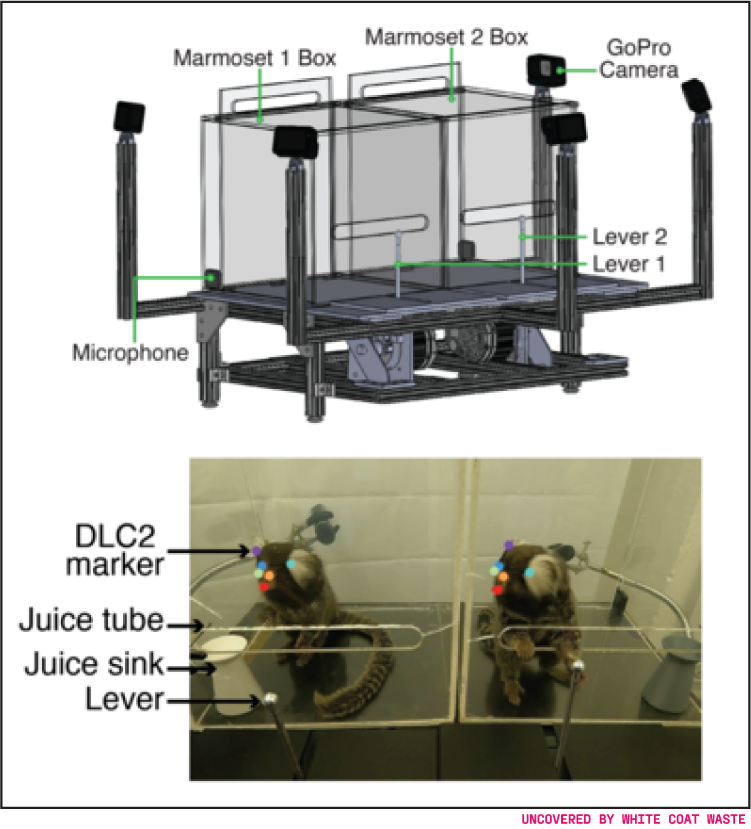
Yet Yale omitted required taxpayer-funding disclosures when promoting its monkey research in a May 27, 2026 news article, prompting WCW to file a formal Stevens Amendment complaint against the university in July 2026.
Taxpayers deserve to know when they are footing the bill for monkey experiments.
For years, WCW has led efforts to hold taxpayer-funded animal laboratories accountable for concealing their costs. Our landmark Up in Smoke investigation exposed disclosure violations involving cannabis and vape experiments, while our earlier investigations helped spur a Government Accountability Office (GAO) review that found widespread failures to oversee compliance.
That work has also supported bipartisan efforts to strengthen transparency through the COST Act and formal complaints, with Senator Joni Ernst targeting Pentagon-funded animal laboratories.
RFK must match his promises with spending cuts — and NIH must hold laboratories accountable when they fail to disclose how they spend taxpayer dollars.